






Most bathroom renovations start with the fun decisions — tiles, brassware, the vanity — and leave the toilet until last, because a toilet is assumed to be interchangeable. If you're considering a smart toilet, that order is exactly backwards. Of everything in the room, the toilet is the one item that dictates where pipework runs, where electricity needs to arrive, and in some cases how a wall is built. Decide it first, while everything is still on paper, and it costs you nothing. Decide it last, after first fix, and it can cost you a finished wall.
Why the toilet is a services decision, not a fittings decision
I trained as an architect, and the habit that carries over most usefully to bathrooms is this: plan the services before the surfaces. A bathroom renovation has a point of no return — the day the walls close up and the tiling starts. Everything routed before that day is cheap; everything routed after it is disruptive. A conventional toilet asks for two things: a soil connection and a cold feed. A smart toilet asks for one more — a protected electrical supply on a fused spur — and that one addition is precisely the kind of thing that's trivial during first fix and painful after it.
The three questions to settle before anyone lifts a tool
- Wall-hung or floor-standing? This is the biggest structural fork. A wall-hung model mounts on a concealed frame that's built into (or in front of) the wall — beautifully clean once tiled, but it must be planned before the wall is finished. A floor-standing model needs no frame and suits a straight swap. Our guide to wall-hung versus floor-standing walks through the trade-offs, and one renovation bonus is worth knowing: a wall-hung frame lets your installer set the seat height to suit you, rather than accepting whatever the ceramic dictates.
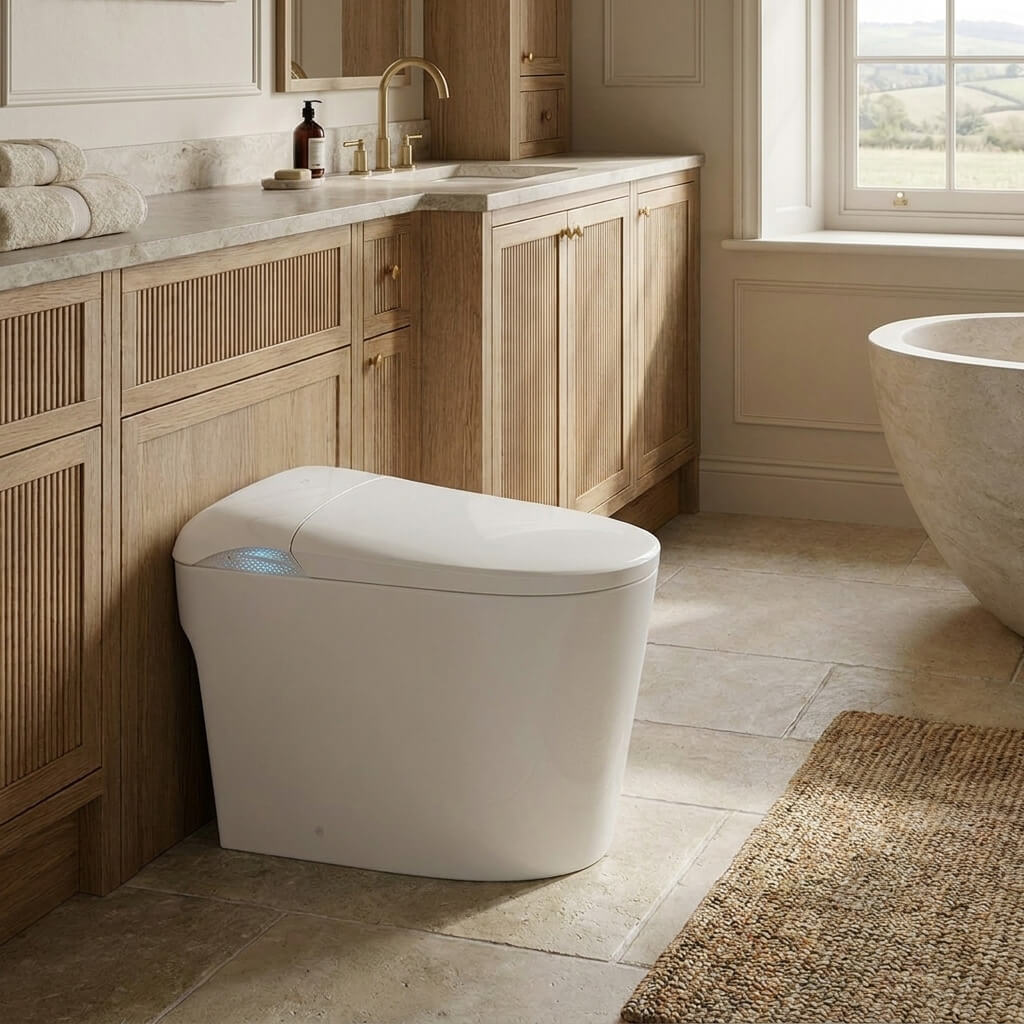
- Where does power come from? The spur wants to sit discreetly near the toilet position. Your electrician will route this in minutes while the wall is open. There's no separate cistern to hide with a Tresani — the tank is built into the unit — so the wall behind can stay a wall, but the cable still has to arrive somewhere.
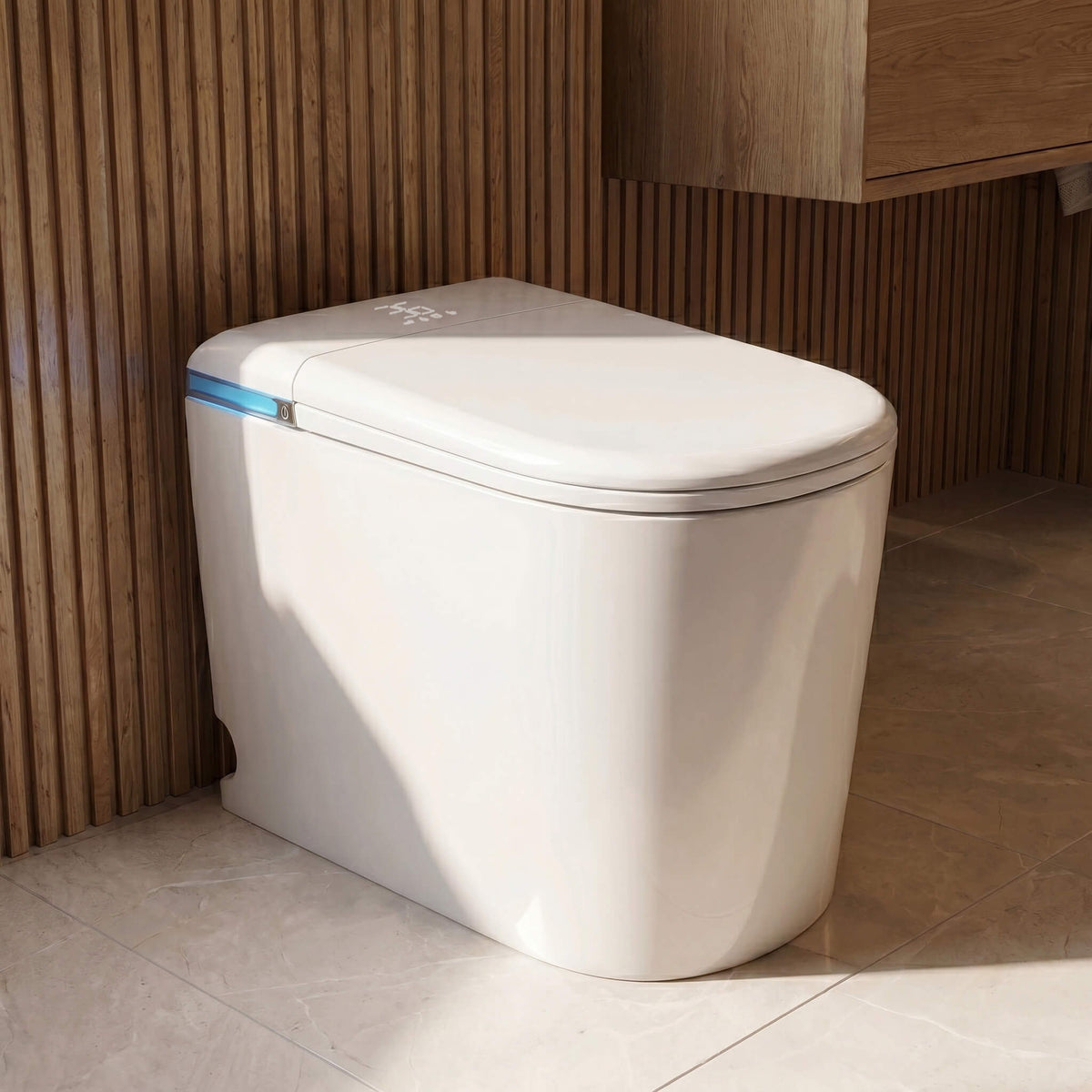
- Is the drainage staying put? Keeping the soil position is the economical choice in any renovation. If you're moving it anyway — a loft conversion, an en-suite carved from a bedroom — you have a blank canvas, and the smart toilet asks for nothing unusual: outlet, feed, spur. One thing to settle early: no Tresani connects straight down into the floor. If your soil pipe comes up through the floor, plan a boxed-in wall (bulkhead) behind the toilet for it to run into — simple at first fix, disruptive after.
How to brief your bathroom fitter
Fitters aren't obstacles to smart toilets — unfamiliarity is. The difference between a smooth installation and a hesitant one is usually a one-paragraph brief given early: the model, its format, and its three requirements (waste outlet, water feed, fused spur). Send the specification sheet before work is priced, not after it's started. Our installation guidance exists precisely to be forwarded to your plumber and electrician — and if either of them wants to talk it through, our co-founder Jason is a plumber by trade and happy to speak installer-to-installer before you commit. It's the conversation we most enjoy having.
The order of operations, briefly
- Design stage: choose the toilet — format, model, position. Our Find your Tresani guide narrows it in minutes.
- First fix: soil, water and the electrical spur go in; a wall-hung frame is built and pressure-tested.
- Surfaces: tiling and finishes close over the services — this is the point of no return.
- Second fix: the toilet itself is mounted, connected and commissioned. Typically a couple of hours.
If your renovation is already underway
All is not lost — it simply narrows your options rather than removing them. If the walls have closed without a frame, a floor-standing model keeps every smart function without structural work. If there's no spur and the tiling is done, an electrician can often find a discreet route — it's extra labour, not impossibility. The honest advice is simply to have the conversation this week rather than after the tiler has been.
A bathroom is renovated perhaps once a decade. The toilet you choose will be used more times a day than anything else in the room — which is a strange thing to leave until last.


Share: