

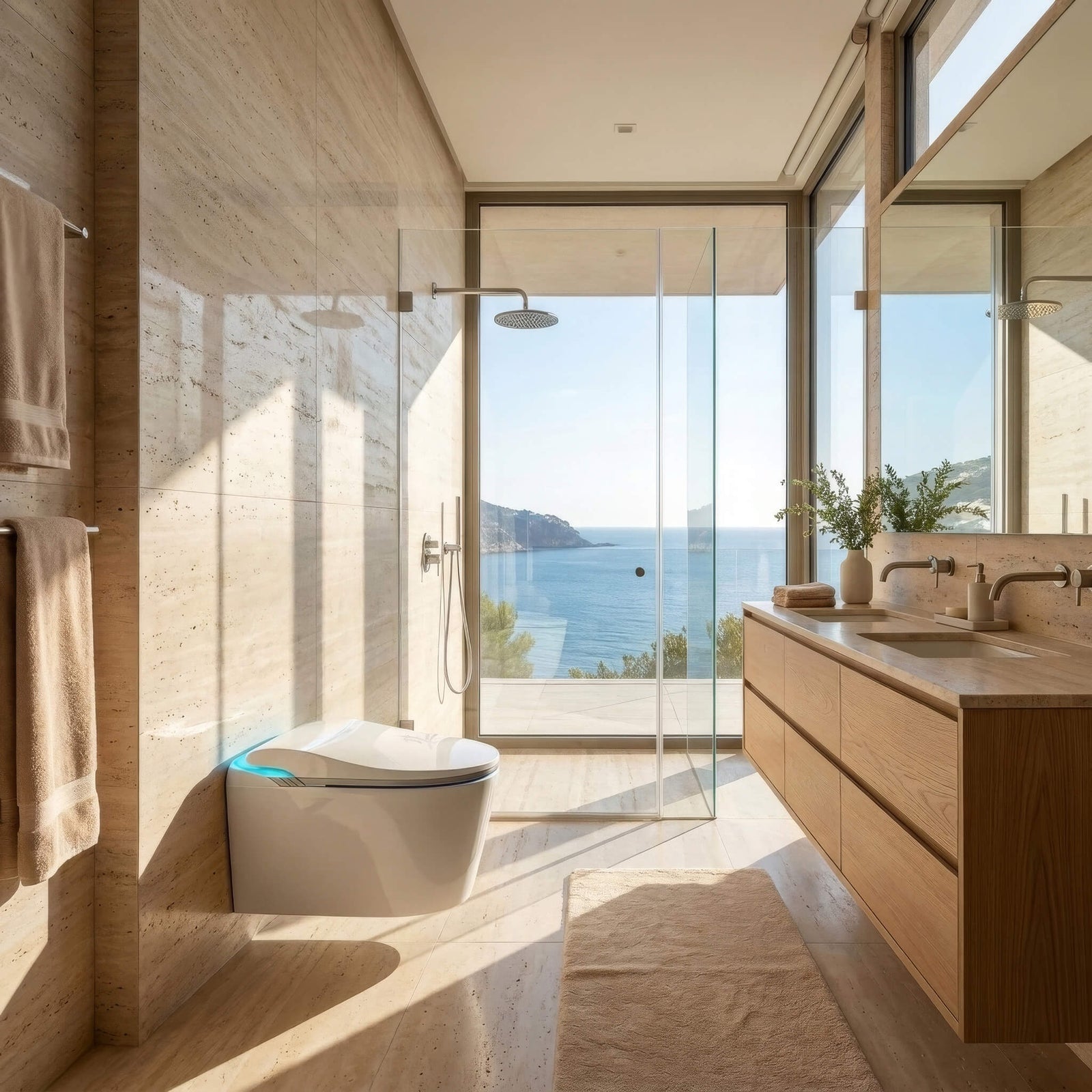
Once you've decided on a smart toilet, the next question is its form: wall-hung or floor-standing. Both deliver the same intelligence — the difference is how they sit in your bathroom. Here's how to choose.
Wall-hung smart toilets
A wall-hung toilet floats clear of the floor on a concealed frame, with the cistern hidden in the wall behind. The result is striking: clean, uninterrupted lines, a sense of lightness, and an open expanse of floor beneath that makes a room feel larger — and far simpler to clean under.
Best for: new builds and renovations, contemporary bathrooms, and smaller spaces that benefit from the visual breathing room. Tresani's Alto, Axia, Elevare and Halo are wall-hung.
Floor-standing smart toilets
A floor-standing unit is a complete, self-contained toilet that sits on the floor — full-size presence, and a more straightforward fit. It connects much like a conventional toilet, making it the easier swap when replacing an existing one without major building work.
Best for: upgrades and replacements, classic bathrooms, and anyone who wants the simpler installation. Tresani's Origin, Prime and Nexus are floor-standing.
The practical differences
- Looks — wall-hung is modern and minimal; floor-standing is classic and substantial.
- Space — wall-hung opens up floor space; floor-standing has a fuller footprint.
- Cleaning — wall-hung is easier to clean beneath; floor-standing has a join with the floor.
- Installation — floor-standing is the simpler swap; wall-hung needs a frame built into the wall, best during a renovation.
- Cost — broadly similar within a range, though wall-hung can add a little for the frame and fitting.
So which should you choose?
Renovating and want the most contemporary, space-enhancing look? Go wall-hung. Replacing an existing toilet and want the easier installation? Go floor-standing. Either way you get the same warm-water wash, heated seat and quiet intelligence.
Compare every model by form and tier in our buying guide — or explore the full range →.


Share: