

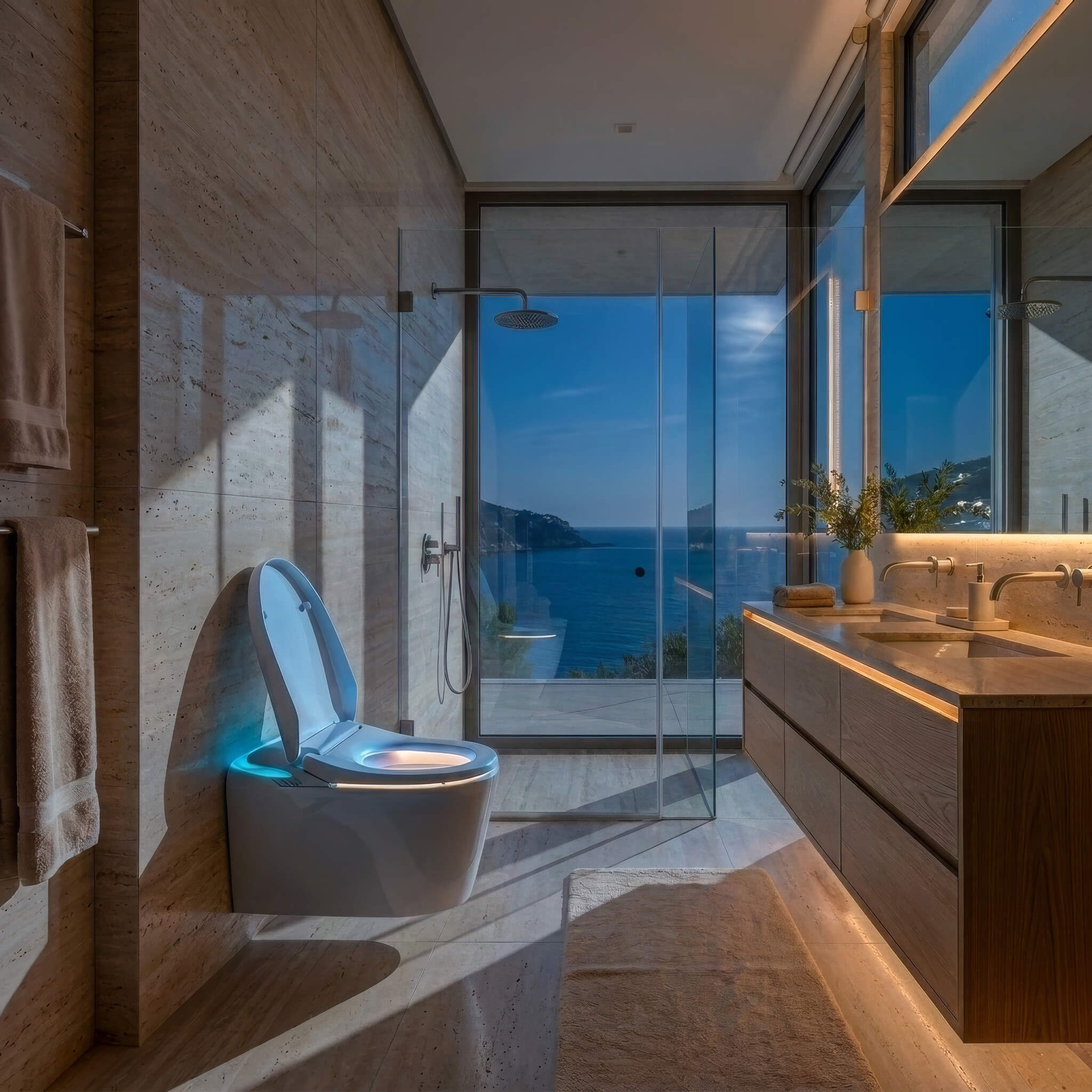
Japan's bathing culture rests on a simple idea Britain has been slow to adopt: that real luxury is everyday comfort, not occasional indulgence. For centuries the Japanese have treated cleanliness as ritual rather than chore — a daily act of care, taken seriously and enjoyed. The smart toilet is the modern inheritor of that thinking. Understanding where it comes from explains why it feels less like a gadget and more like a quiet upgrade to ordinary life.
A heritage of bathing
Bathing in Japan has long been communal and considered. The sento, the neighbourhood bathhouse, and the onsen, fed by natural hot springs, made washing a shared ritual rather than a private rush. At home, the evening ofuro — a deep soak taken after washing, not instead of it — marks the end of the working day, a few minutes of warmth and stillness that belong to no one but you.
What runs through all of it is an attitude. Cleanliness is not a task to be got through but something close to a courtesy — to yourself, to your home, to the people around you. You wash thoroughly before you soak. The bath is for rest, not scrubbing. The order matters, and the care is the point.
The rise of the washlet
The smart toilet — the washlet, as it became known in Japan — grew naturally out of this culture. In a country where warm-water washing was already understood as cleaner and more comfortable than paper alone, a heated seat, an adjustable wash and a warm-air dryer were not novelties but logical refinements. They spread quickly, and today they are unremarkable in Japanese homes: not a luxury for the few but a normal part of a normal bathroom.
That ordinariness is telling. The technology never announced itself. It simply made an everyday moment cleaner and more comfortable, and then became the standard.
Luxury as the everyday
Here is the idea worth borrowing. In Britain we tend to file luxury under the occasional — the spa weekend, the good hotel, the treat. Japan's bathing culture suggests something quieter and, in the long run, more valuable: that the things you do every single day are the ones most worth making good. A warm seat on a cold morning. A clean, fresh start without effort. Soft light instead of a harsh switch at night. None of it is dramatic. All of it adds up.
Comfort taken daily compounds in a way that occasional indulgence never can. That is the heart of quiet luxury — not what you show, but what you live with.
What this means for a British home
You do not need to recreate an onsen to take something from this. The principle travels: treat the bathroom as somewhere that deserves care rather than a purely functional room, and choose fittings that make the everyday better. A calm, considered space — the kind explored in our guide to designing a Japanese-inspired bathroom — does more for daily life than a grand gesture made once.
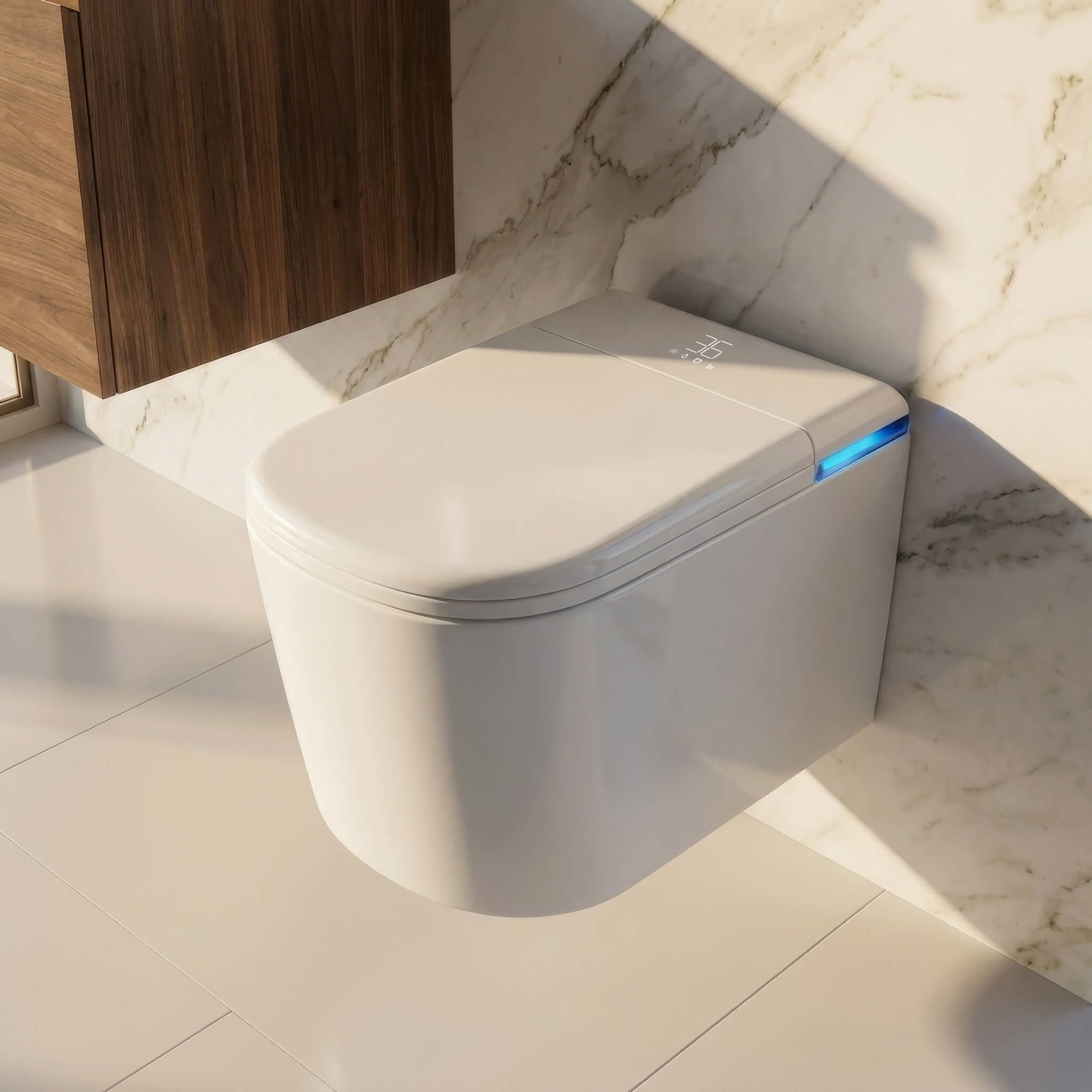
An integrated smart toilet is the most direct way to bring the idea home: warm-water washing, a heated seat, a soft night light, a rimless bowl that stays clean, all built into one quiet object you use without thinking.
Tresani's interpretation
This is the thinking Tresani was built on, and the reason we are unapologetically Japanese-inspired. We make complete, integrated smart toilets designed to make an ordinary moment a little better, every day — not a fixture that shouts, but one you quietly come to rely on. Design-led, calm, and meant to be lived with for years.
If that idea appeals, browse the range or let our buying guide find the model that fits your home.

Share: