

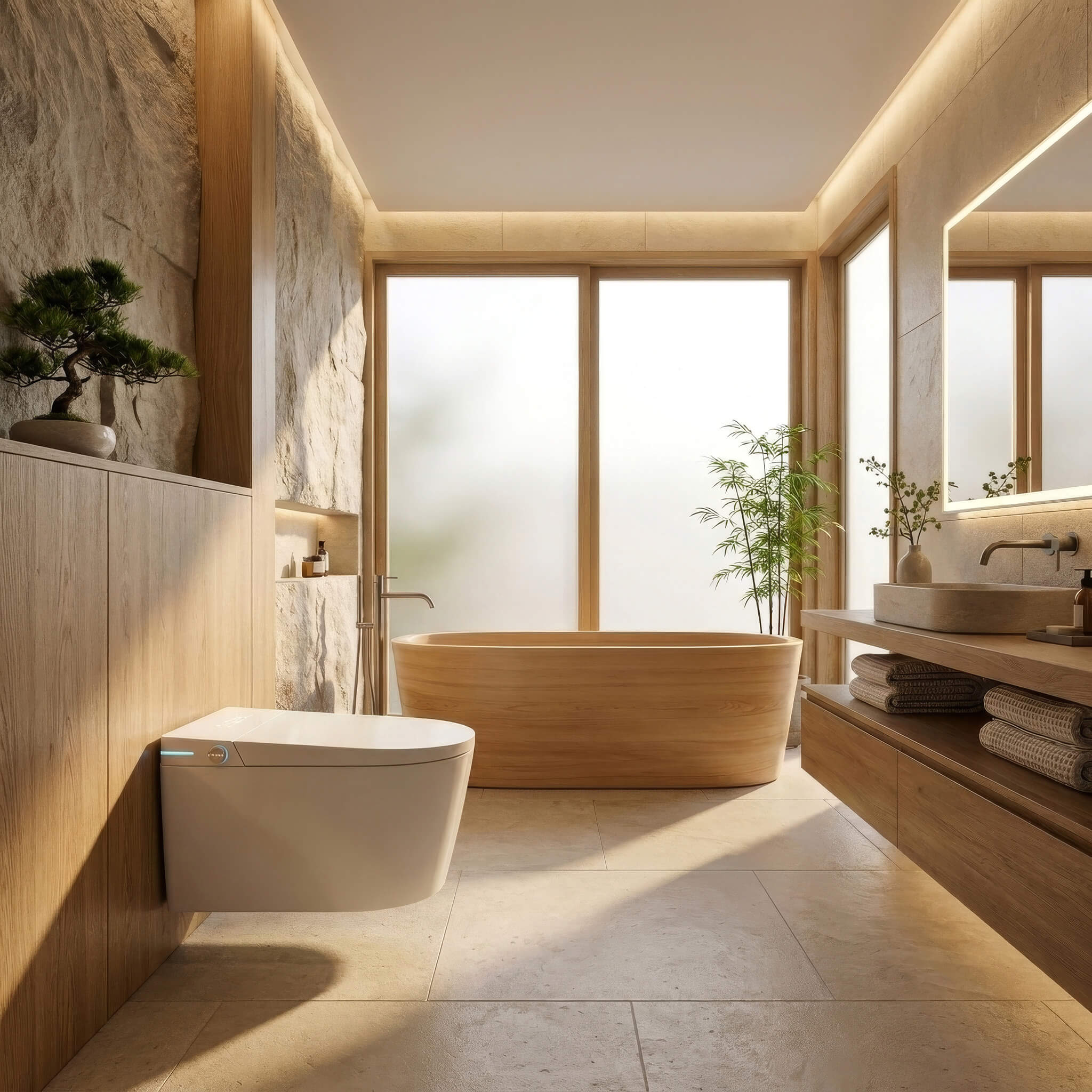
A Japanese-inspired bathroom is built on restraint: natural materials, clean lines, warmth and very little clutter, arranged so the room has space to breathe. The aim is calm rather than spectacle. You achieve it by choosing a few honest materials, hiding the things that do not need to be seen, softening the light, and treating the room as somewhere to slow down rather than simply pass through. Here is how the principles translate into a real bathroom.
Start with the philosophy
The thinking behind a Japanese bathroom is quieter than most British ones. It prizes calm and a sense of room to breathe, with a light, respectful touch of wabi-sabi — the appreciation of the natural, the imperfect, the gently aged. That does not mean stark or empty. It means considered: every object earns its place, and nothing shouts. The result feels settled rather than styled.
Practically, this means resisting the urge to fill the room. Leave surfaces clear. Let one beautiful material do the talking. Allow a little asymmetry rather than forcing everything into a grid.
Natural materials and a muted palette
Wood and stone are the backbone. Warm timber — oak, ash, or a richer tone for contrast — brings softness underfoot and at the eye. Stone, whether honed limestone, slate or a quiet microcement, grounds the room. Keep the palette muted: soft whites, warm greys, sand, clay, the colours of natural materials left more or less as they are. Avoid high-gloss everything and hard primary colours. The palette should feel like it was found, not picked from a chart.
A single plant — a fern, a small maple, a piece of moss — does more than a shelf of accessories. So does a folded linen towel and a simple stone tray.
Reduce the clutter
Clutter is the enemy of calm, and bathrooms gather it. The Japanese answer is to conceal. Wall-hung fixtures keep the floor visible, which makes the room feel larger and lighter. A concealed cistern hides the plumbing behind a clean wall. Storage goes into recessed niches and closed cabinets rather than open shelves crowded with bottles.
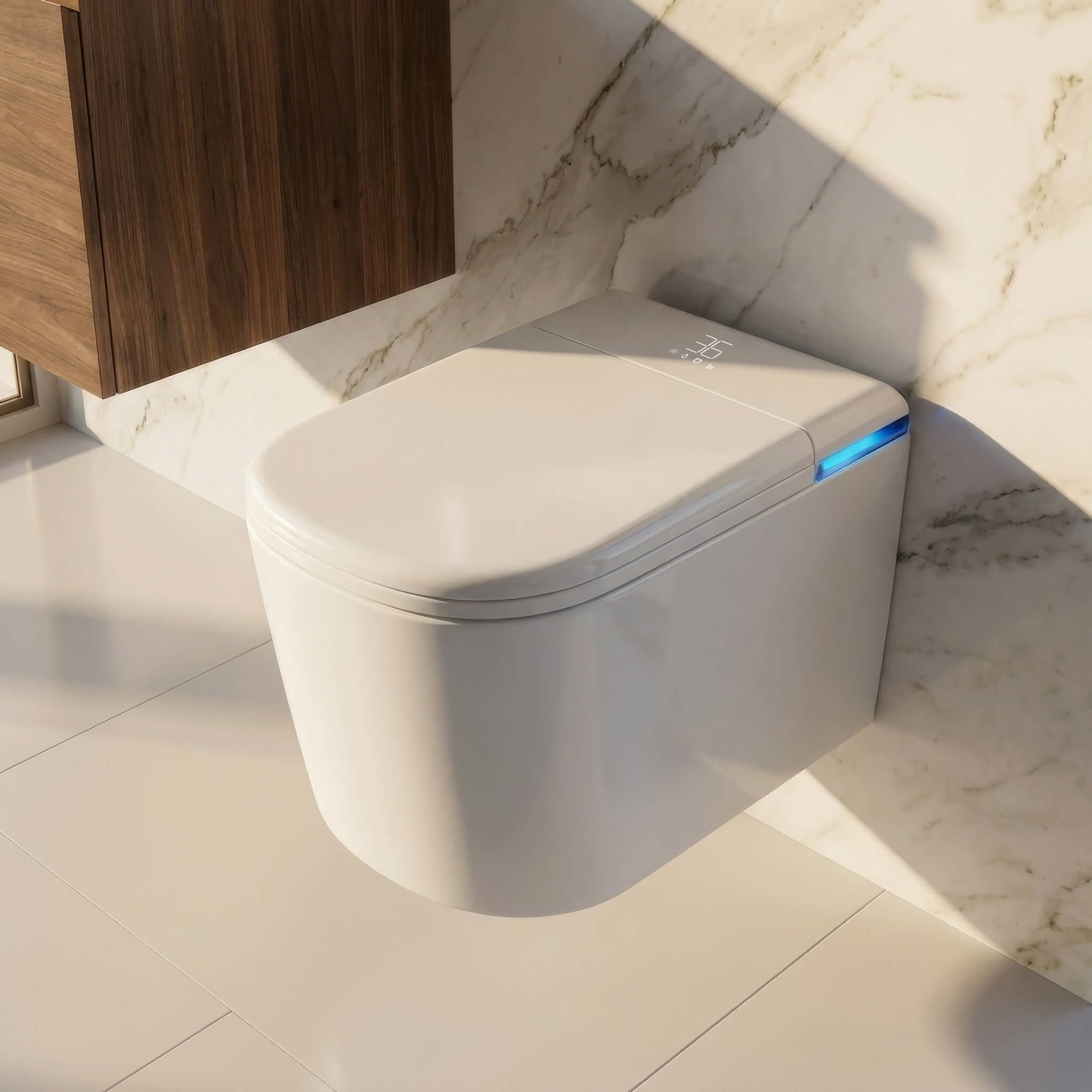
The toilet is part of this. An integrated smart toilet keeps its technology hidden inside the unit — no visible tank, no bolt-on attachments, no tangle of controls. If you are weighing how it sits in the room, our guide to wall-hung versus floor-standing models is a useful starting point.
Warmth and soft light
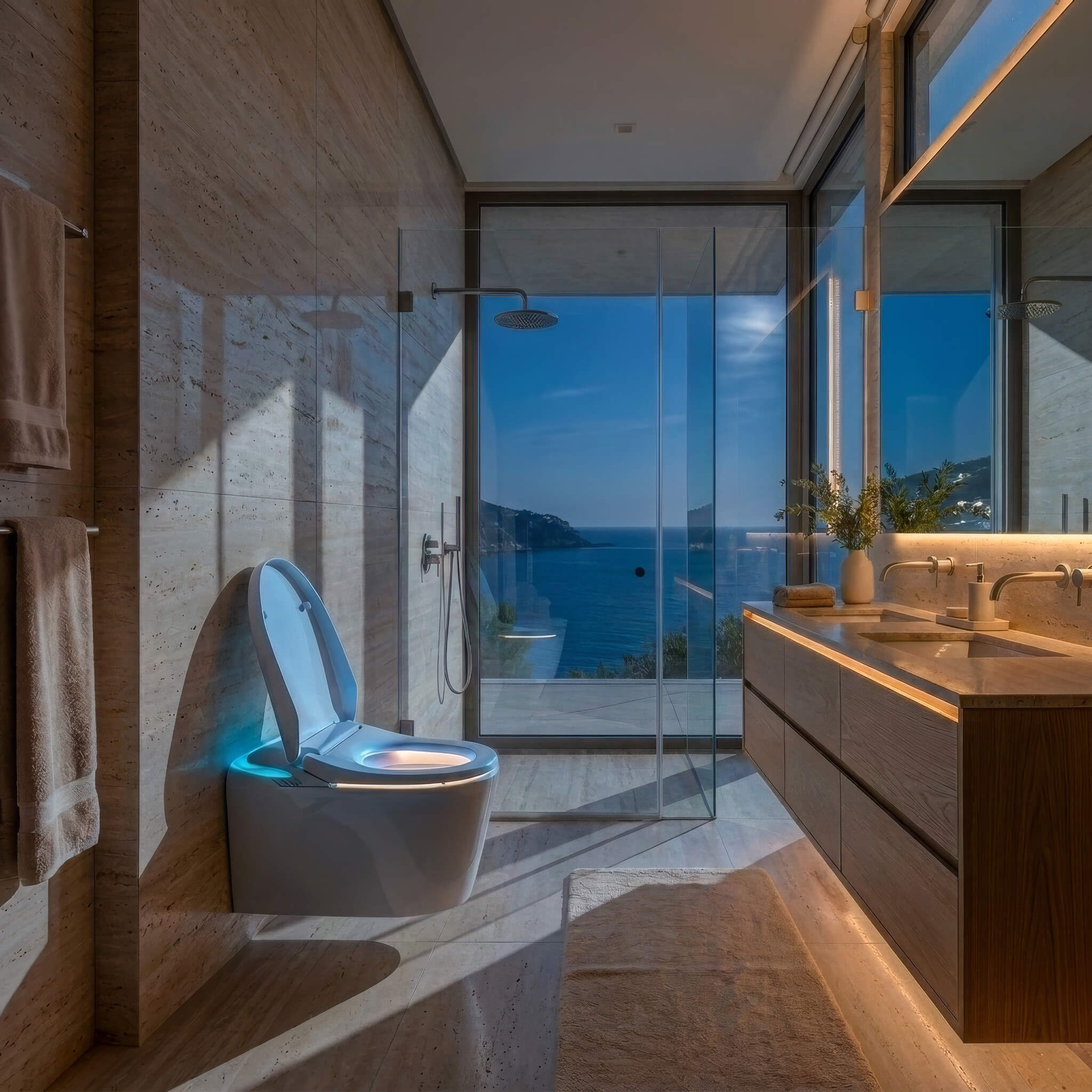
A calm bathroom is a warm one. Cold tile and bright overhead light undo everything else. Layer the lighting instead: a soft, low wash for the evening, warmer bulbs, and shadows allowed to stay. Heated elements matter more than people expect — a heated floor, warm towels, and on the toilet itself a heated seat and a soft night light that means you never need the harsh main light after dark.
These small comforts are the point. They turn a functional room into one you are glad to be in.
The bathroom as ritual
Underneath all of this is an idea worth keeping: the bathroom is not only utility. In Japan, washing and bathing are treated as ritual, a daily moment of care rather than a chore — a tradition explored in our piece on Japanese bathing culture. Design the room so it supports that. Clear surfaces, warm light, honest materials and well-made fittings all nudge you to slow down.
A Tresani smart toilet is meant to fit exactly this kind of room: rimless, integrated, quiet to use, with the technology out of sight and the comfort built in. If you are planning a Japanese-inspired bathroom, browse the range or use the buying guide to find the model that suits your space.

Share: