

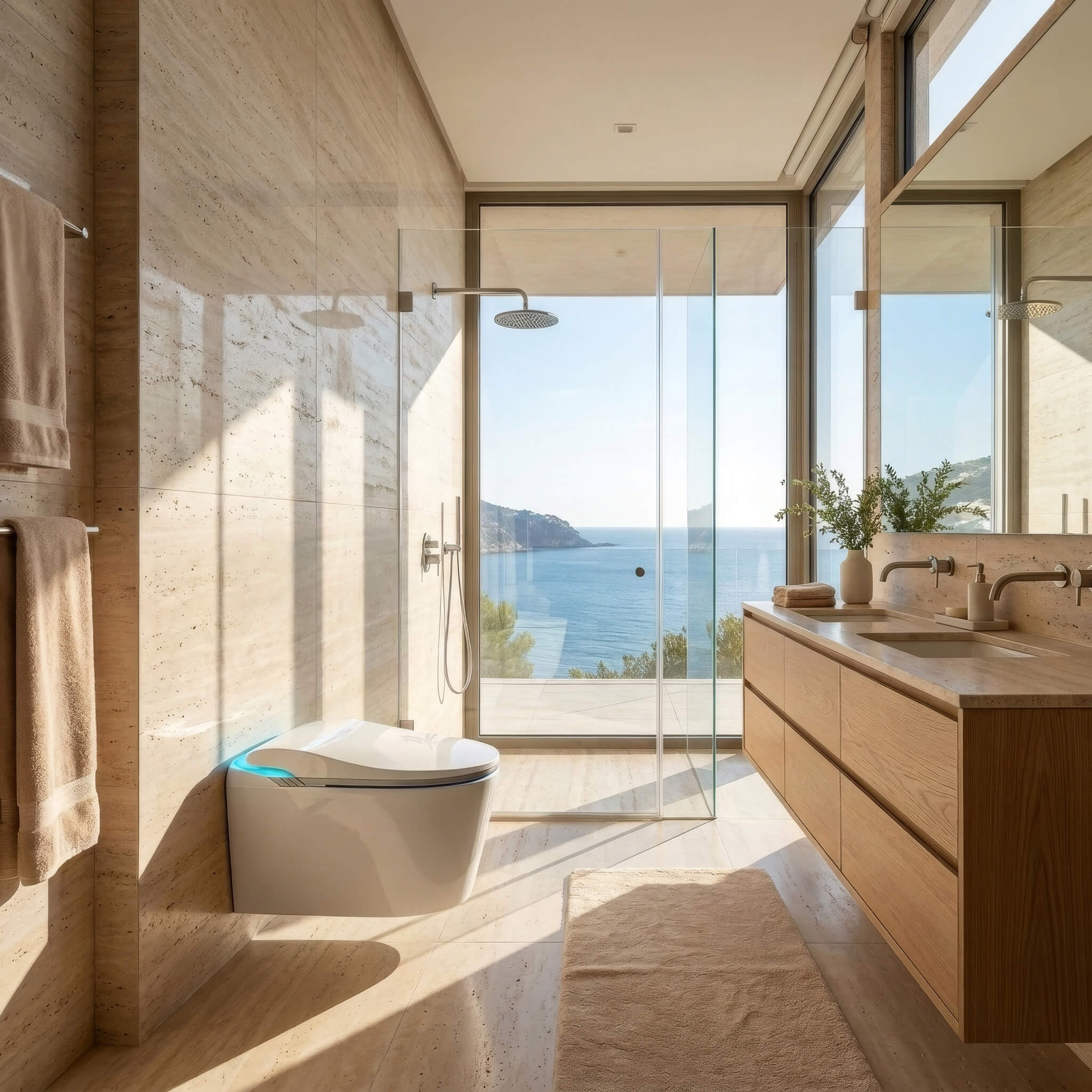
A smart toilet can use less water than the one it replaces, not more. That surprises people who assume a unit with a built-in wash must be thirsty, but the figures point the other way. Modern dual-flush volumes are low, the rimless bowl rinses clean with less water, and the wash itself uses only a small amount, less than you would use at a basin. Here is how it adds up, and a measured word on what it means for your bills and the environment.
The worry, addressed
The natural concern is that all those water features must waste water. In practice the wash is brief and gentle, delivering a thin stream of warm water for a short spray rather than running a tap. The volume involved is small, typically well under half a litre per use, and it replaces paper rather than adding to your overall flush volume. So while you are using a little water to wash, you are not adding much, and the bigger numbers, the flushes, are where a smart toilet quietly does better than an old one.
Dual flush: full or reduced
Every unit in our range uses a dual flush, giving you a full volume when you need it and a reduced volume when you do not. Older toilets, especially anything more than a decade or two old, can use a great deal more per flush with no reduced option at all. Simply replacing such a toilet with a modern dual-flush unit usually cuts flush water noticeably, and because the lighter flush handles most visits, the savings accrue every day. For how this feeds into running costs overall, see our note on what a smart toilet costs to run.
Rimless efficiency
The rimless bowl matters here as much as it does for hygiene. Because there is no concealed rim channel to flush around, water is directed efficiently across the whole surface and the bowl comes clean with less of it. A conventional rimmed bowl often needs a second flush or a scrub to look right; a well-designed rimless one tends not to. Cleaner with less water is the whole point, and we explore the design in the benefits of a rimless smart toilet.
The wash uses very little
It is worth restating plainly: the warm-water wash is one of the smaller draws on water in your bathroom. A short wash uses a fraction of what a tap does in the same time, and far less than a shower. When it replaces paper, it also reduces what the household sends down the drain in other forms. For a fuller picture of what each feature does, our features glossary lays them out.
A measured environmental note
We will not overstate this. A smart toilet is not going to single-handedly change your water footprint, and we are wary of greenwashing. But the honest position is reasonable: a modern dual-flush, rimless unit replacing an older, thirstier toilet tends to use less flush water, and washing with a small amount of water reduces paper use. Lower water use and less paper are modest, genuine benefits, no more and no less. If a smaller environmental footprint matters to you, the direction of travel is the right one.
To match a model to your bathroom and your priorities, our buying guide is the place to start, and you can browse the full range whenever you like.


Share: