






Nearly everyone who falls for Japanese bathrooms learns the same word first: washlet. Usually in a Tokyo hotel at some unearthly jet-lagged hour, confronted by a toilet with a control panel and — within about a day — unable to imagine going back. Then they return home, search for "washlet UK", and discover the word is more complicated than the experience. So let's untangle it properly.
A brand name that became a category
Washlet is a trademark of TOTO, the Japanese manufacturer that launched the original electronic bidet seat in 1980. What TOTO shipped was, strictly, a seat — a warm-water washing, heated replacement lid that fitted onto an ordinary toilet. It was a genuine turning point: over the following decades the warm-water toilet went from novelty to national default in Japan, to the point where most Japanese homes now have one and the bare cold toilet feels, to a Japanese visitor in Britain, faintly medieval.
Along the way the brand name did what Hoover and Biro did — it escaped. People now say "washlet" to mean any toilet that washes you, whoever makes it. There's no shame in the shorthand; it's how language works. But when you're actually buying, the distinction underneath the word matters a great deal.
The distinction hiding inside the word
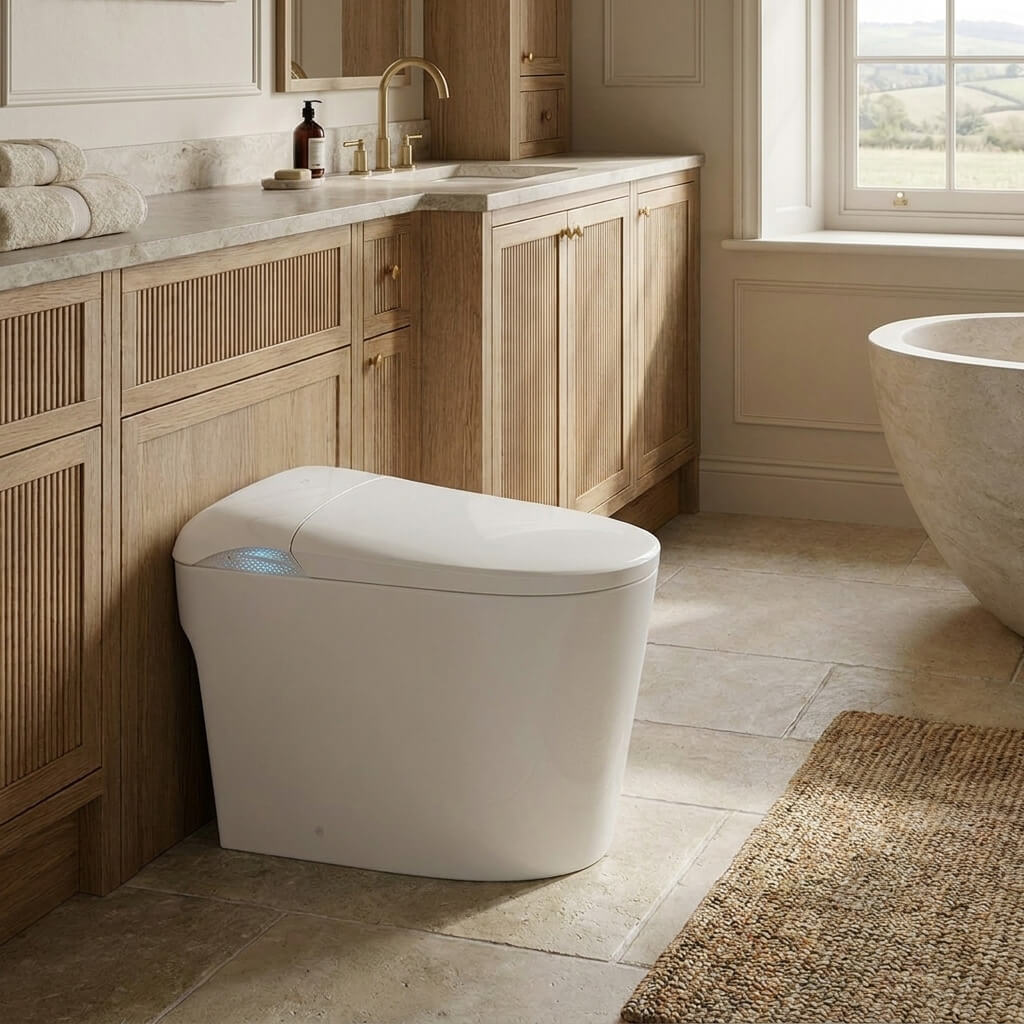
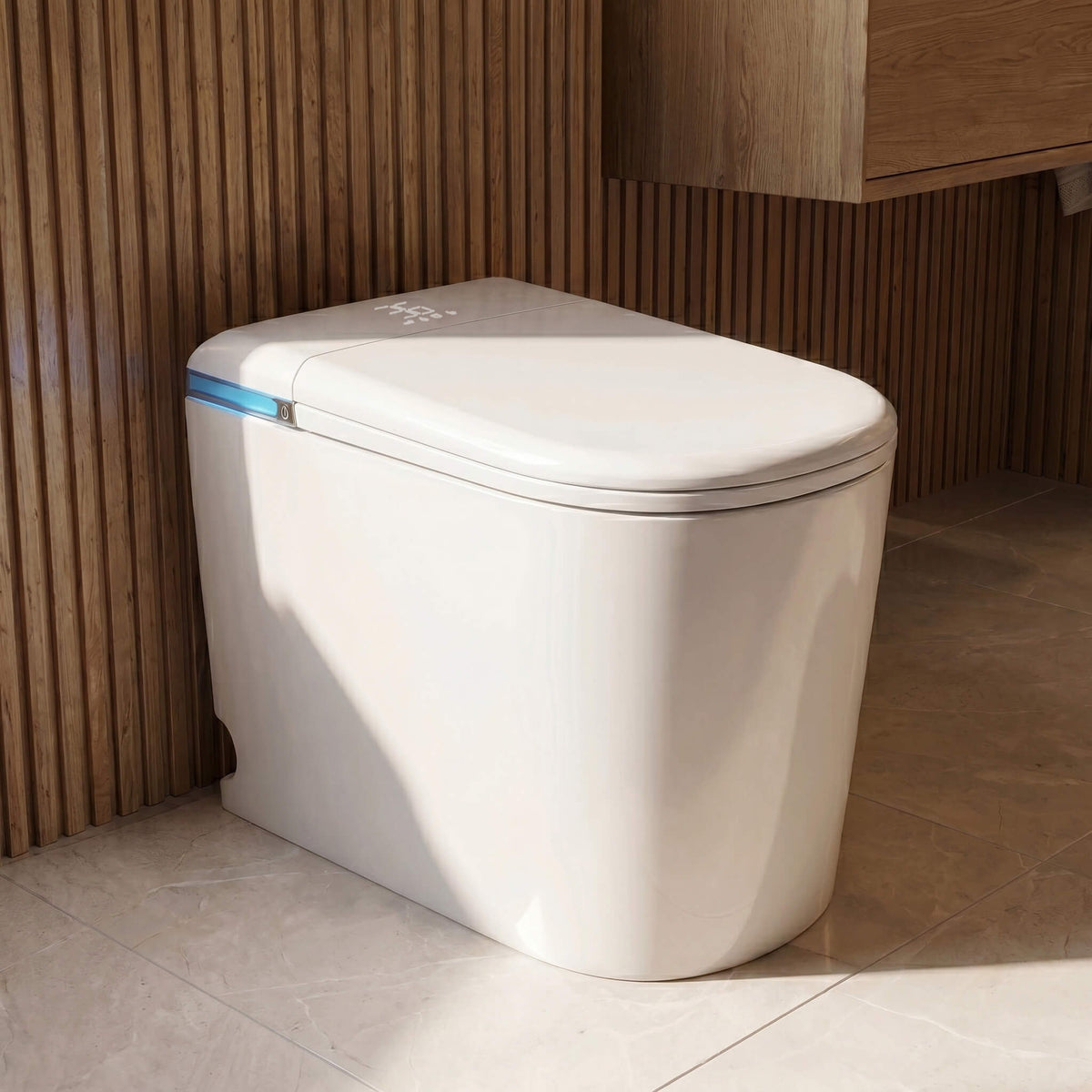
What most people picture when they say washlet today isn't a seat bolted to a Victorian pan — it's the complete object they met in that hotel: one sealed, sculptural unit where the washing, warming, drying and flushing are designed together. That's an integrated smart toilet, and it's a different product from a retrofit seat in almost every way that touches daily life: the proportions of the whole thing, the automatic lid that greets you, the flush that happens as you leave, the absence of a visible cistern and trailing seams. We've written a full comparison — bidet seats versus integrated smart toilets — but the short version is: the seat retrofits the experience; the integrated unit is the experience.
What to look for in a modern washlet-style toilet
If the hotel moment is what you're chasing, judge any candidate — ours included — on the things that made that moment work:
- Warm water, adjustable. Temperature and pressure you can set, from a remote rather than a stretch-behind panel.
- A heated seat. The feature nobody thinks they care about until the first cold morning after.
- Hands-free behaviour. Lid and flush that act on their own — this is where the sense of ceremony lives.
- Self-maintaining hygiene. A wand that rinses and sterilises itself between uses.
- UK-ready plumbing. Japan's homes are built for these; Britain's weren't. A built-in tank that guarantees a full flush at any water pressure is what makes the transplant effortless.
The question people actually mean
"Can I get a washlet in the UK?" usually decodes to: can I have the Japanese hotel bathroom at home, without importing something with a Japanese plug and manual? Yes — comfortably. TOTO sells here, and we've written honestly about how to choose between TOTO and Tresani. Our own range exists precisely for this question: integrated Japanese-style smart toilets specified for British bathrooms, plumbing and support — the Find your Tresani guide matches you to the right one in a couple of minutes.
The word will keep wandering — washlet, smart toilet, bidet toilet, Japanese toilet — and honestly, any of them will do. The experience is the fixed point: the small, civilised shock of a bathroom that meets you halfway. That part needs no translation.


Share: