

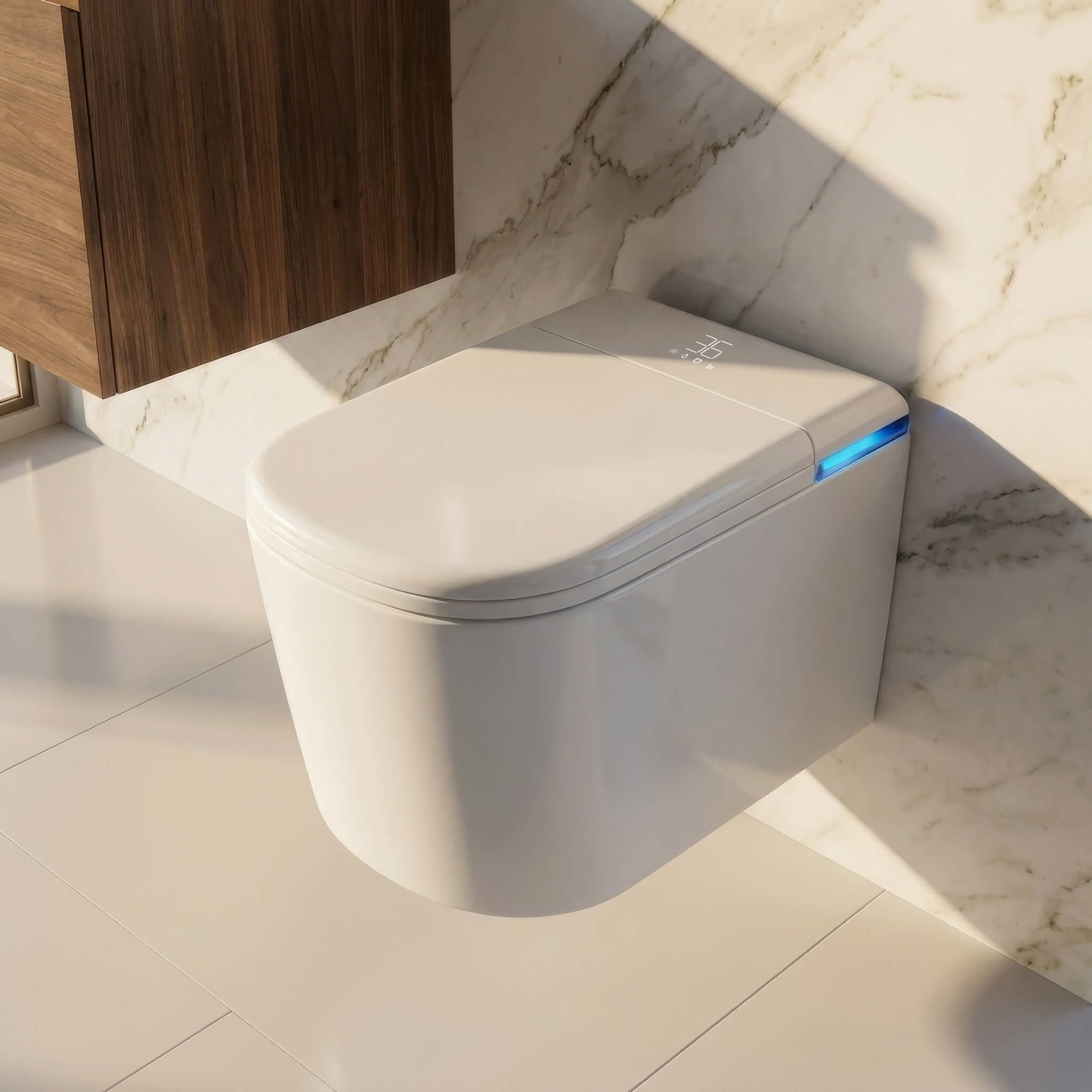
Choosing a smart toilet is easier if you work through it in order: start with your bathroom and plumbing, then power and installation, then the features that matter to you, then design, and finally budget. Get the first question right and the rest narrow themselves down. Here is the framework we use, five questions that take you from a wide field to a clear shortlist.
1. Your space and plumbing
Begin with the room, because it rules out more than anything else. The main decision is wall-hung or floor-standing. A wall-hung unit mounts on a concealed frame, frees up floor space and can be set to a comfortable height — ideal for smaller or more design-led bathrooms, though it needs a stud or built-out wall to take the frame. A floor-standing unit is simpler to fit where a standard pan already sits and connects to existing waste more directly. Our comparison of wall-hung versus floor-standing models walks through which suits which room.
2. Power and installation
A smart toilet needs an electrical supply, because the heating, washing and drying all run on power. In practice that means a fused spur near the toilet, ideally added by an electrician when the bathroom is fitted. It is worth understanding this early, since it can shape where the unit goes. Read why smart toilets need electricity for what is involved, and our installation guide for how a typical fit works.
3. The features that matter to you
Every Tresani model gives you the essentials — a rimless bowl, adjustable warm-water wash, warm-air dryer, heated seat, deodoriser and night light. The differences sit higher up: auto-open and soft-close lids, touchless flush, and signature touches such as Halo's illuminated LED ring or Nexus's Bubble Shield foam. Decide which of these you will actually use day to day rather than paying for features you will not. Our guide to smart toilet features explains what each one does.
4. Design and finish
This is where taste comes in, and it deserves real weight — a toilet you live with for years should be one you are glad to look at. Consider the form (the clean minimalism of Alto and Axia, the presence of Halo, the floor-standing solidity of Origin and Prime), how it sits with your tiles and fittings, and the proportions in your particular room. A smart toilet is a considered object; choose one that belongs in your bathroom.
5. Budget and finance
Finally, set a budget — but think in terms of the whole life of the toilet, not just the price on the day. Tresani models start from around £1,195, come with free UK delivery, and are backed by a lifetime ceramic warranty with two-year cover. To make a higher-tier model manageable, 0% finance lets you spread the cost without paying more overall. That often makes the deciding factor comfort and design rather than price alone.
That is the framework. If you would rather not work through it yourself, our buying guide asks the same questions and hands you a shortlist in a couple of minutes — the fastest way to the right model. When you want to browse, see the full range.

Share: