

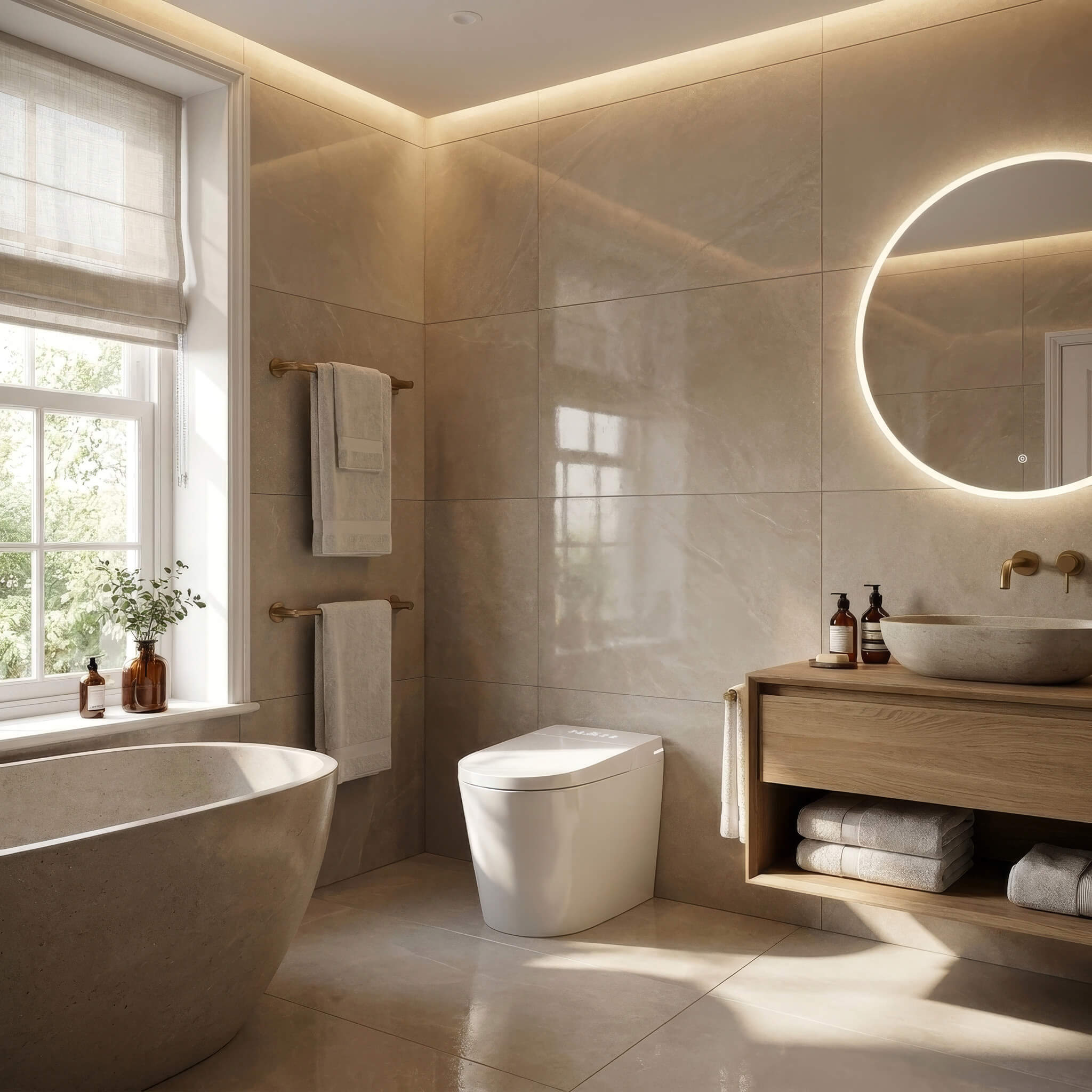
A smart toilet can make the bathroom easier, safer and more dignified to use without help. Warm-water washing and a warm-air dryer mean no reaching or twisting to clean; hands-free flushing and an automatic lid remove the need to bend or grip; and a wall-hung unit can be set at a height that suits the person who uses it. For someone managing reduced mobility, arthritis or recovery from surgery, these are practical aids to independence. They are comfort features, not medical equipment, and a professional should advise on any real adaptation — but the everyday difference can be significant.
Dignity and independence first
The bathroom is where a loss of mobility is felt most sharply, because it is where most of us least want help. A smart toilet matters here less for its technology than for what that technology allows: using the toilet, cleaning and drying, and leaving the room without assistance. Keeping that independence, for as long as possible, is the point.
Washing and drying without reaching
The wash and dry functions are the heart of it. An adjustable warm-water wash cleans without the reaching and twisting that ordinary use requires — movements that can be painful or simply not possible with reduced mobility, arthritis, or while recovering from an operation or injury. A warm-air dryer then finishes the job, so there is no need to reach for paper either. For many people this single change restores a part of daily life they had quietly given up on.
Hands-free operation
Grip and fine movement are often the first things to go. Smart toilets reduce how much either is needed. On premium models the lid opens and closes automatically as you approach and leave, and the flush is touchless — no handle to press, no lever to turn. A remote control or a side panel puts the wash, dry and temperature settings within easy reach, with clear buttons rather than awkward dials. Less bending, less gripping, less strain.
Set to a comfortable height
This is where a wall-hung model earns its place. Because it mounts on a concealed frame rather than the floor, the pan height can be set during installation to suit the person who will use it — higher for someone who finds it hard to lower themselves and rise again, or set to assist transfer for a wheelchair user or a carer helping. It is a small decision at fitting that pays back every day. Our guide to smart toilet features explains each function in more detail.
Safer at night, and warmer all round
Night-time visits are a common moment for falls. A soft blue night light marks the toilet in the dark without the jolt of a bright main light, making the journey safer and gentler. Beyond safety, the simple warmth of a heated seat is a real comfort — easier on stiff joints and a small daily kindness for anyone who feels the cold.
An honest word
A smart toilet is comfort equipment, not a medical device, and we would not pretend otherwise. It can make the bathroom easier and more dignified to use, but it does not replace proper assessment. If you are adapting a home for someone with a specific condition or disability, ask an occupational therapist to advise — they can confirm what will genuinely help and how it should be fitted. Whether a smart toilet is the right investment is something our piece on whether they are worth it may help you weigh up.
If accessibility is your reason for considering one, the buying guide will point you towards the wall-hung models that can be set to height, and you can see them all in the range.


Share: